
Pizza Hut is a famous pizza chain globally, but it has developed differently in the Netherlands as compared to other European countries. Despite the brand being operational in the bigger Dutch cities and having been able to build a customer base over the years, its presence has been relatively minimal and has evolved in the past few years. To obtain an unbiased image of the Pizza Hut restaurants in the Netherlands, one has to refer to the expansion of the company within the big cities and to its position of work.
Pizza Hut Locations in the Netherlands
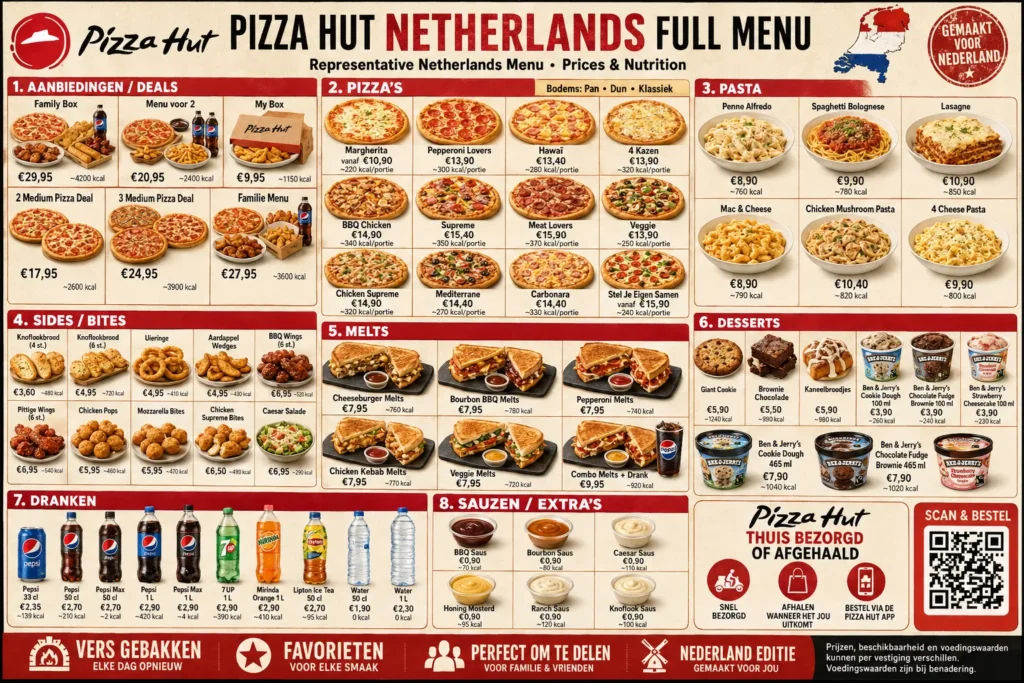
Pizza Hut overview in Netherlands
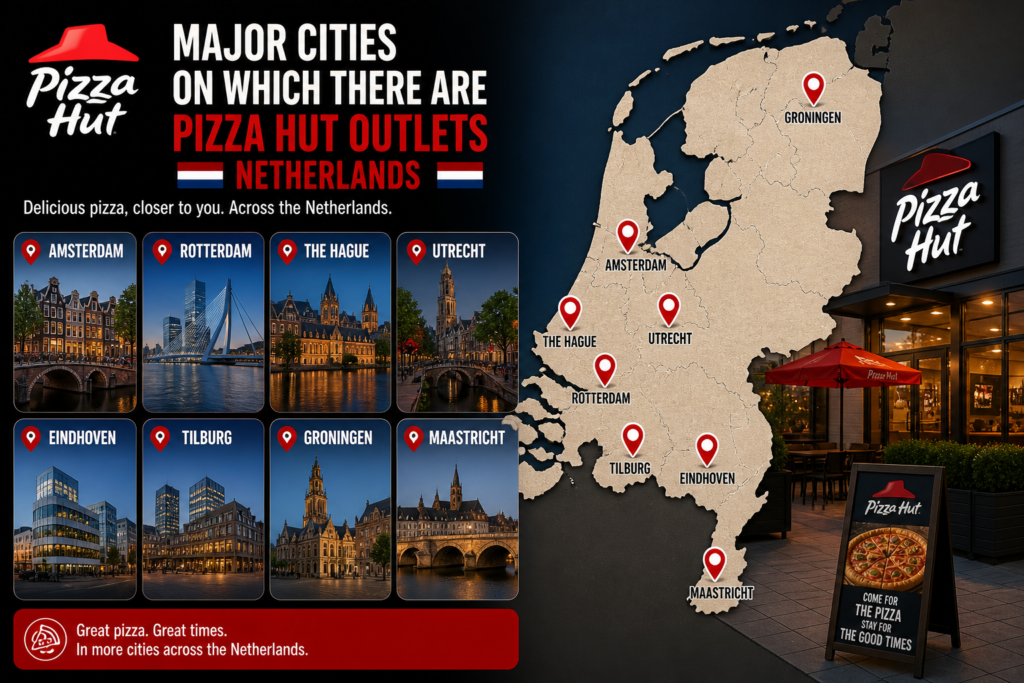
Pizza Hut entered the Dutch market, aiming at offering American-style pizza, convenient dining, and delivery services. The brand, over time, has opened its stores in some of the major cities in the country, and foreigners visiting the region. The main regions where the customers could easily access Pizza Hut restaurants included Amsterdam, Rotterdam, The Hague, Utrecht, and Eindhoven.
Pizza Hut has never been as strong in the Netherlands as it is in other countries, such as the UK or France. Nevertheless, its overall strategic orientation to the large cities enabled it to be visible and provide the services to the regions where the demand for fast food and international cuisine was high.
Major Cities on which there are Pizza Hut outlets
Pizza Hut restaurants in the Netherlands were established mainly in major cities where population density and tourists are most prominent. Amsterdam is the cultural and tourist centre of the country, and that played a major role in the existence of the brand. The restaurants of Amsterdam were often located near the train stations, shopping streets, and tourist attractions, and were visited by both residents and tourists.
The city of Utrecht, with a high number of students, also had Pizza Hut restaurants, which served the youth who were interested in fast and cheaper food. Eindhoven, a large technology city, had shops that were efficient and quick-service oriented, which fitted in the busy schedule of professionals and families.
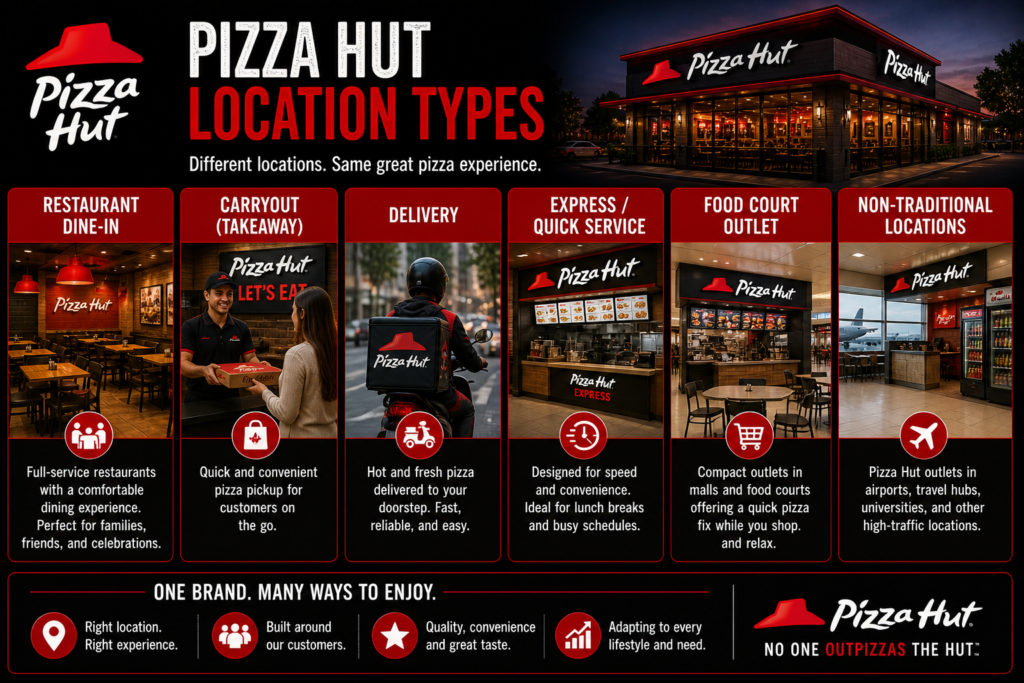
Pizza Hut Location types
In the Netherlands, Pizza Hut had various forms of restaurants, just like the international prototype. Conventional restaurants that served food to be consumed in-house were full-service with seats, so they could be used by families and groups. These places tended to have more of a menu and a casual ambiance.
Delivery-oriented stores gained more significance with time. These outlets were fast and efficient; customers could place their orders online or over the phone and get their food within a short time. This model was in line with the Dutch demand for convenience and takeaway food.
Menu and Local Adaptation
Pizza Hut Netherlands had a menu that was characterized by both international and local tastes. The traditional pizzas, like pepperoni, BBQ chicken, and cheese, were available, as well as the specialty ones, to customers. Simultaneously, the brand adjusted its menu to the Dutch preferences, providing a greater portion of vegetarian recipes, pizzas dominated by cheese, and other options of crust.
It was highly customized, with customers being given the choice to select their favorite toppings, crust forms, and the size of portions. The menu also comprised sides like chicken wings, pasta, garlic bread, as well as desserts other than pizza, making it a complete dining experience.

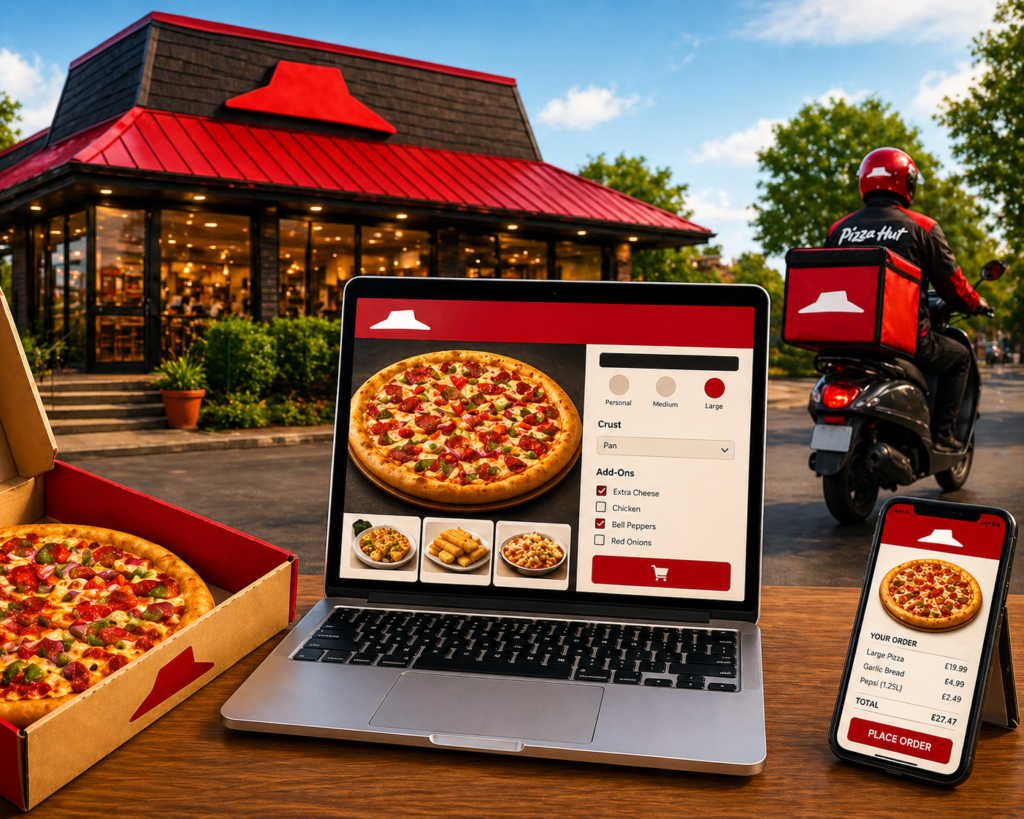
Comfort and Delivery Services
Pizza Hut underlined the aspect of convenience in the Dutch market with a variety of ordering possibilities. Customers could go to dine-ins, make takeaway orders, or have the food delivered using online platforms. Several of the outlets had modern technology like digital menus, self-service kiosks, and a mobile order system.
Online ordering proved particularly successful, since it allows the customers to navigate their menus, design their own meals, and access special offers. Delivery would be quick and efficient to deliver hot and fresh food.
Dutch Competition
The Dutch pizza market is very competitive, with both local and global brands. Other chains like Domino’s and New York Pizza are much more widespread throughout the nation, with a wide network of delivery and menus that are tailor-made.
The market is well-established by local Dutch chains, especially. New York Pizza, which was established in Amsterdam, is an example of a company with hundreds of locations that closely fits into the local food culture.
This competitive nature made it difficult for Pizza Hut to grow aggressively in the Netherlands, restricting its growth as compared to other nations.
Significant Alterations and Exit of the market
One of the most significant developments that would be of concern to Pizza Hut is the withdrawal of the company from the Netherlands. The brand suffered a reduction in the number of locations, and it had to contend with increasing competition and operational problems.
So far, as we are aware, all the Pizza Hut restaurants in the Netherlands, both dine-in and express, have eventually closed.
It serves as a sign that, unlike in most other European nations, today, in the Netherlands, there are no official locations of the Pizza Hut. The old listing and historical information may still be referring to the Pizza Hut restaurants; however, this is not the current situation.
Customer Experience and Legacy
As it operated in the Netherlands, Pizza Hut had a reputation for offering a uniform and familiar dining experience. Customers liked the menu, the speed of service, and the variety. The brand was especially well-received by the tourists and expatriates who already knew Pizza Hut in other countries.
The relaxed atmosphere was offered in dine-in restaurants, and the convenience of delivery was provided by the companies that specialized in it and offered home delivery to their customers. With a rather insignificant footprint, Pizza Hut was able to establish a following in the major cities.
The Reason Why Pizza Hut Was in trouble
Several reasons led to the poor performance of Pizza Hut in the Netherlands. The stiff competition of international and local pizza chains was one of the key factors. There are companies such as Domino that have a wide network of delivery, and therefore, they are more accessible to customers in the country.
The next reason was the Dutch bias towards local brands and fresh, tailor-made food. The menus of local pizza chains tended to be more in line with the local tastes and preferences, thus they had an upper hand over international competitors.
Market factors and operational costs could also have contributed to the choice of the brand to leave the Netherlands.
Conclusion
The Pizza Hut restaurants in the Netherlands used to serve in big cities like Amsterdam, Rotterdam, The Hague, Utrecht, and Eindhoven with a combination of dine-in, take-away, and delivery services.
Nevertheless, the brand did not manage to stay on the Dutch market and finally shut down all its stores and left the country because of the high competition and evolving market environment.
Although Pizza Hut is no longer active in the Netherlands nowadays, it has left its mark on the history of the fast-food industry of the country. Customers seeking alternatives are turning to other global and domestic pizza chains, which still cater to the Dutch market.